Check-Ins are designed to accompany the lecture videos for the respective module. Questions will be tied to on-screen prompts within the video or recommended linked videos.
Click on the link below to be taken to a Google Slide. SAVE A COPY OF THIS SLIDE TO YOUR OWN GOOGLE ACCOUNT so that you are able to edit it. The week's lesson video will explore demonstrations and design impact related to the theme of the module: feel free to follow along with the video guidelines.
This week, you will edit the above slide according to the element of Line. To accomplish this, you may change the following:
You may not:
Consider how line can communicate the topic of your slide and provide clarity of Hierarchy of Information. Should they be soft and flowing or hard and crisp? How does this manifest in a good font choice? How can you use lines to separate information or make connections? Are you using implied lines to emphasize effectively? How can changing the visual strength of your line show your audience the difference in important versus less important on the slide?
Paste the Google Drive share link to your slide. Sharing should be set so anyone with the link can view it.
In what ways can you relate the positions of lines to the ways we normally associate the positions of the human body?
Where is the implied line in this painting? What does the fact that this is an implied rather than a physical connection change about the interpretation?
“Creation of Adam” from the Sistine Chapel by Michelangelo. 1508–12.
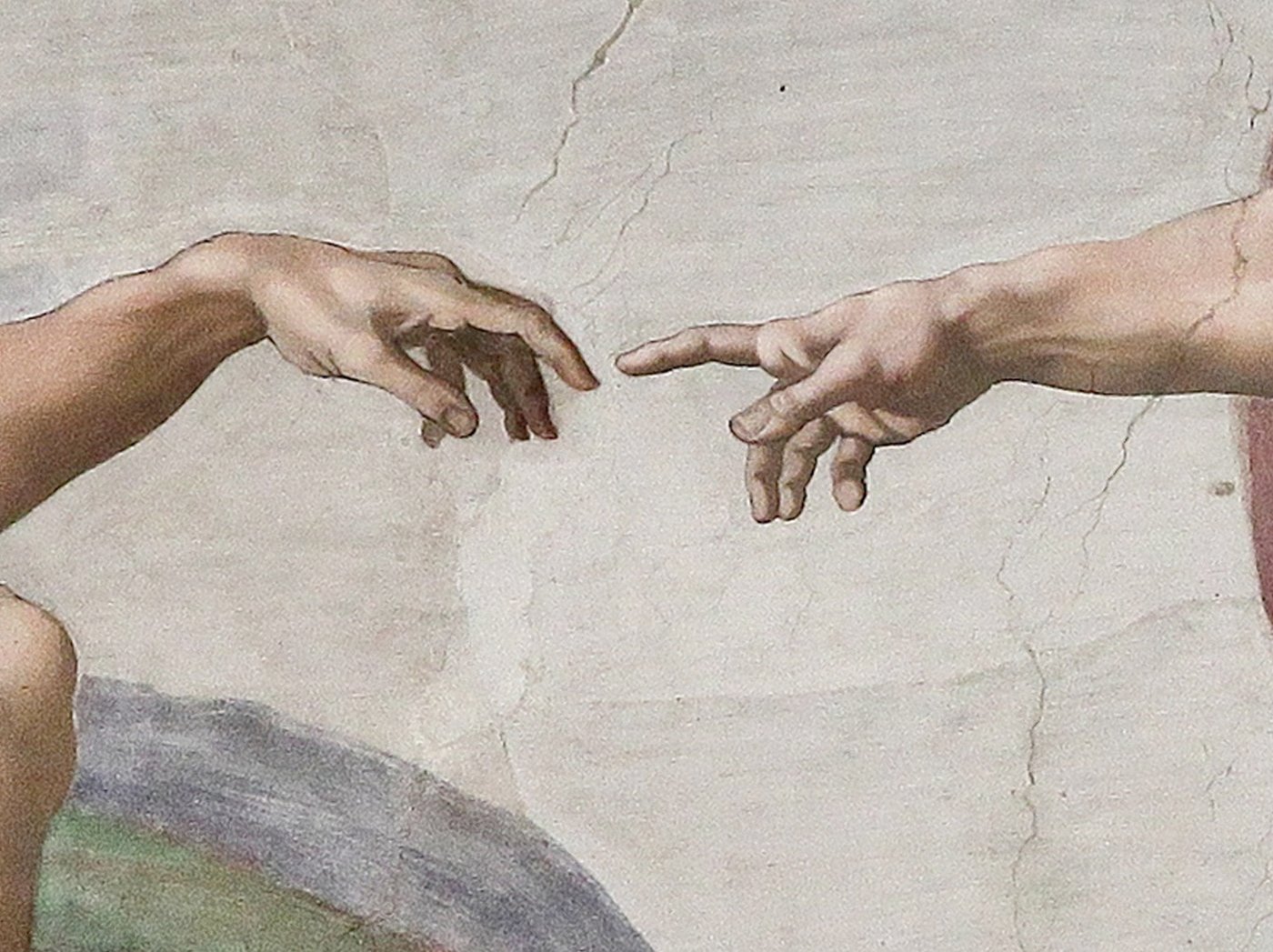 Sistine Chapel, Vatican Museums.
What is one way choosing to stylize your artwork rather than depict it naturalistically can have an impactful meaning?
What symbolic meaning can you interpret from the rays of sun delivering ankh symbols to Akhenaten and Nefertiti in this hieroglyphic carving?
“Akhenaten, Nefertiti and their Children” by Unknown Artist. c. 1351–1334 BCE.
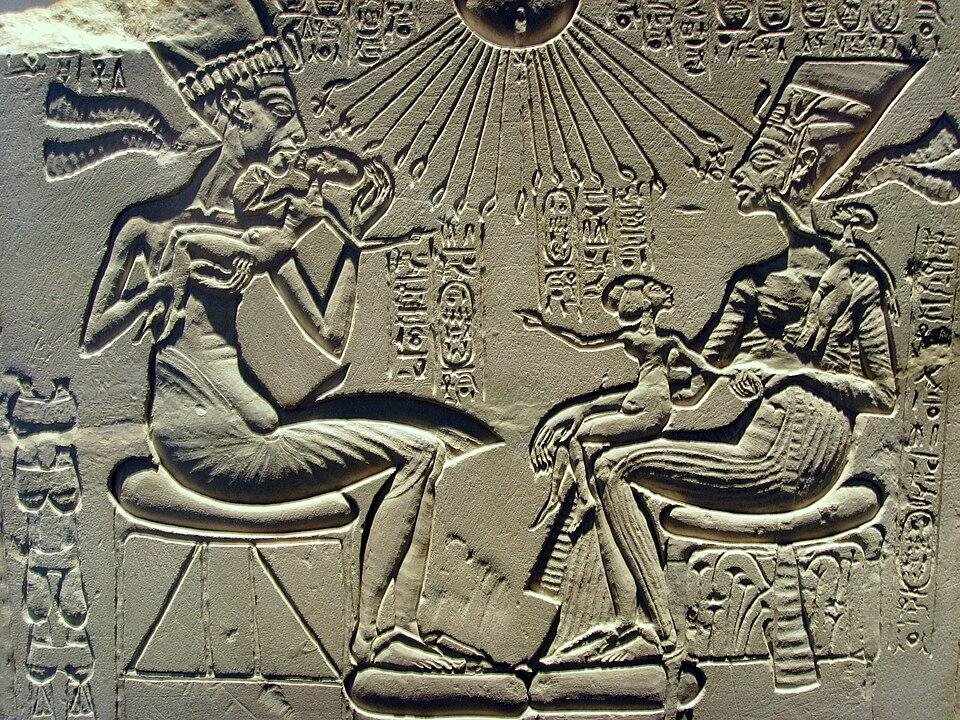 Photo: Gerbil / Wikimedia Commons, CC BY-SA 3.0. Neues Museum, Berlin, ÄM 14145.