Each week, you will write 1 written response: these are opportunities for you to practice using vocabulary and building the foundations for sound academic arguments so you can express your opinions on subjective matters with confidence.
Your third response assignment is a choice: pick either the "Nkisi N'kondi" figure or the "Elephant Candelabrum" and answer their respective prompts below.
Nkisi N'Kondi figurine. Kongo. 19th century.
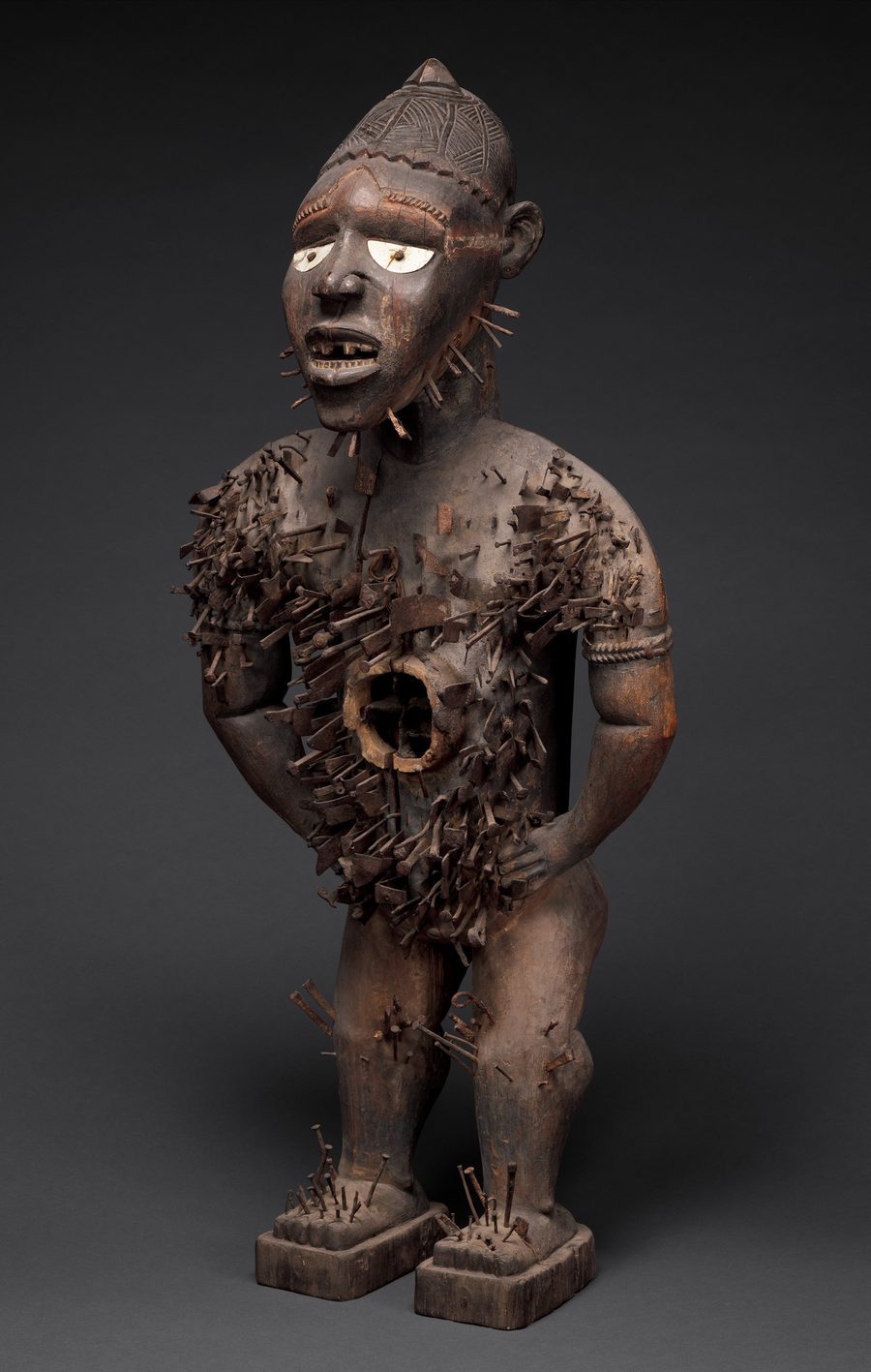 Metropolitan Museum of Art, 2008.30.
Consider the "Nkisi N'kondi" sculpture of the Kongo people. Describe the artwork using as many elements and principles as you can. How does the relatively smaller scale of objects like these make them more appropriate for nomadic lifestyles? How do they hold value beyond their aesthetic appeal? What do these materials symbolize? What occasions might be appropriate to the use of this sculpture? What objects in our or other cultures do we give similar power to?
Elephant Candelabrum. Sèvres Factory. 1758.
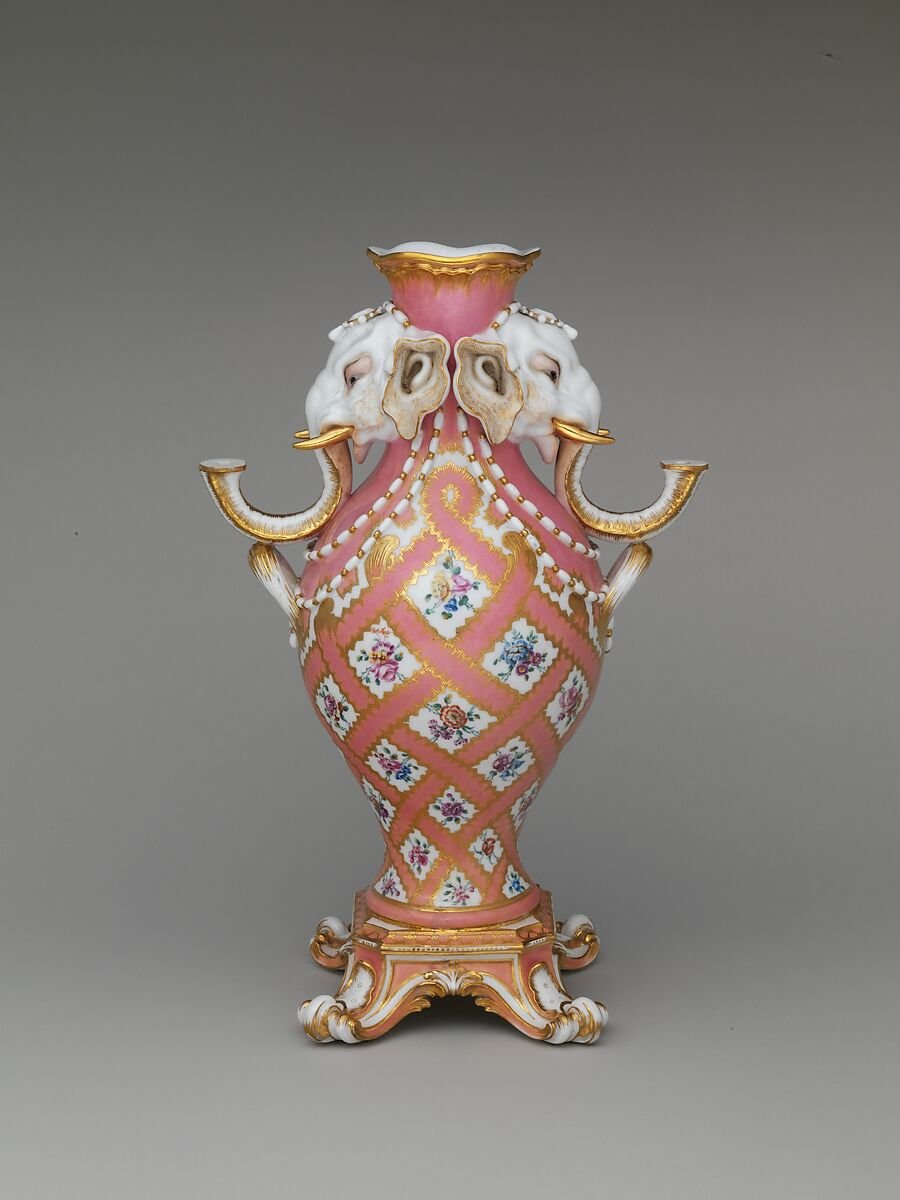 Art Institute of Chicago, 1986.3446.
Respond to the "Elephant Candelabrum" from the Google Art Project. Describe the artwork using as many elements and principles as you can. How does it utilize both shape and form? Give examples. Provide examples of negative space and shape. Consider the historical context. What sort of environment would you imagine this piece occupying BOTH then & now? What sort of activities would you imagine would go on in that environment that might include this piece: how does the form and material give you clues (think back to our experiment with the restaurants in your first video)?